Sleep changes
Baby sleep regression: a popular term for a changing phase
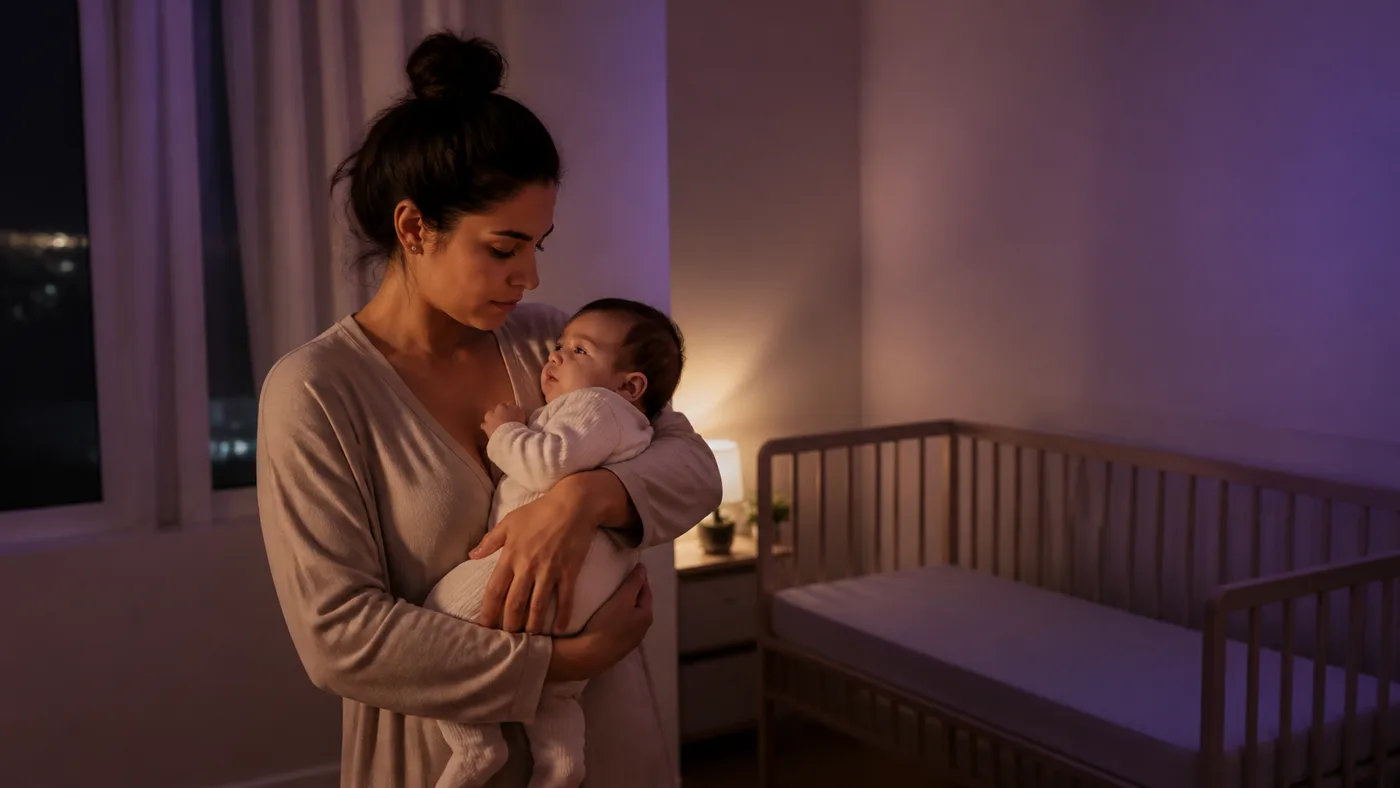
Understand this popular term with care and observe temporary changes without turning variation into a diagnosis.
Regression is not a diagnosis
Families use sleep regression to describe a temporary change, such as more wake-ups, difficulty settling, or different naps. The label does not identify the cause and does not replace professional assessment.
There is also no universal age when it starts, guaranteed length, or identical script for every baby. Experiences can vary widely.
How to observe a different phase
Name it without diagnosing
Use the term only to describe a change you have noticed in your baby's pattern.
Log the context
Note health, teething, development, routine, environment, and the sleep you observe.
Support and reassess
Keep care consistent, make small adjustments, and seek help when needed.
What may be happening at the same time
Development, illness, teething, travel, a changed environment, feeding, and routine changes can coincide with a different pattern. Coincidence alone cannot identify a cause.
Notice your baby's cues and the full context. If there are symptoms, pain, or a change that concerns you, a pediatric conversation is more useful than a ready-made explanation online.
Observe without predicting an end date
Log when the change began, what happened during the day, and how your baby seemed. This can show whether the pattern is reorganizing or whether a factor continues.
Avoid promises that everything will pass in a few days or that one technique works for every family. The aim is safe support and realistic adjustments.
When to seek an assessment
Contact a pediatrician for breathing difficulty, fever, pain, feeding refusal, concerns about weight, unusual sleepiness, inconsolable crying, or any change that feels important to your family.
A sleep change may be a variation, but the health context deserves attention whenever warning signs are present.
How Sonequinha helps you observe
Sonequinha organizes logs so you can compare days and nights, recalculates the next moments when a new nap is logged, and helps you see the pattern without relying on an age or duration promise.
Timeline for a change in pattern
- BeforeLog what wake-ups, naps, and the routine looked like.
- ChangeNote what shifted and which events happened around it.
- ContextObserve health, feeding, environment, development, and cues.
- SupportKeep care realistic and seek guidance if warning signs appear.
Frequently asked questions
- Is sleep regression an illness?
- No. It is a popular expression for a perceived pattern change and does not identify a cause or diagnosis.
- Does it always happen at a certain age?
- There is no universal age or duration. The change may coincide with development, illness, teething, or a routine shift.
- How can I know how long it will last?
- A duration cannot be promised. Log the change and its context, and seek help if the concern persists.
- When should I call a pediatrician?
- Seek guidance for breathing difficulty, fever, pain, feeding refusal, concerns about weight, unusual sleepiness, or significant distress.
Final considerations
This content is informational and does not replace pediatric care. Sleep regression is a popular term, not a diagnosis, duration promise, or single explanation.
References
- NHS, helping your baby to sleepPublic information on sleep, the sleep environment, and variation in the first year.
- American Academy of Pediatrics, healthy sleep habits and durationReference on sleep habits and broad duration ranges by stage.
- Brazilian Society of Pediatrics, How to help my child sleep betterInstitutional guidance on prevention and habits that support children's sleep.